graph TB
    In[Input]:::input --> Dispatcher[Dispatcher]:::llm

    Dispatcher --> LLM1[LLM Call 1]:::llm
    Dispatcher --> LLM2[LLM Call 2]:::llm
    Dispatcher --> LLM3[LLM Call 3]:::llm
    Dispatcher --> LLM4[LLM Call 4]:::llm

    LLM1 --> Synth[Synthesizer]:::llm
    LLM2 --> Synth
    LLM3 --> Synth
    LLM4 --> Synth

    Synth --> Out[Output]:::output

    classDef input fill:#8B4444,stroke:#6B3333,color:#fff
    classDef llm fill:#4A7C59,stroke:#3A6B49,color:#fff
    classDef output fill:#8B4444,stroke:#6B3333,color:#fff
Pattern 3: Parallelization
Simultaneous Multi-Source Processing
What Is This Pattern?
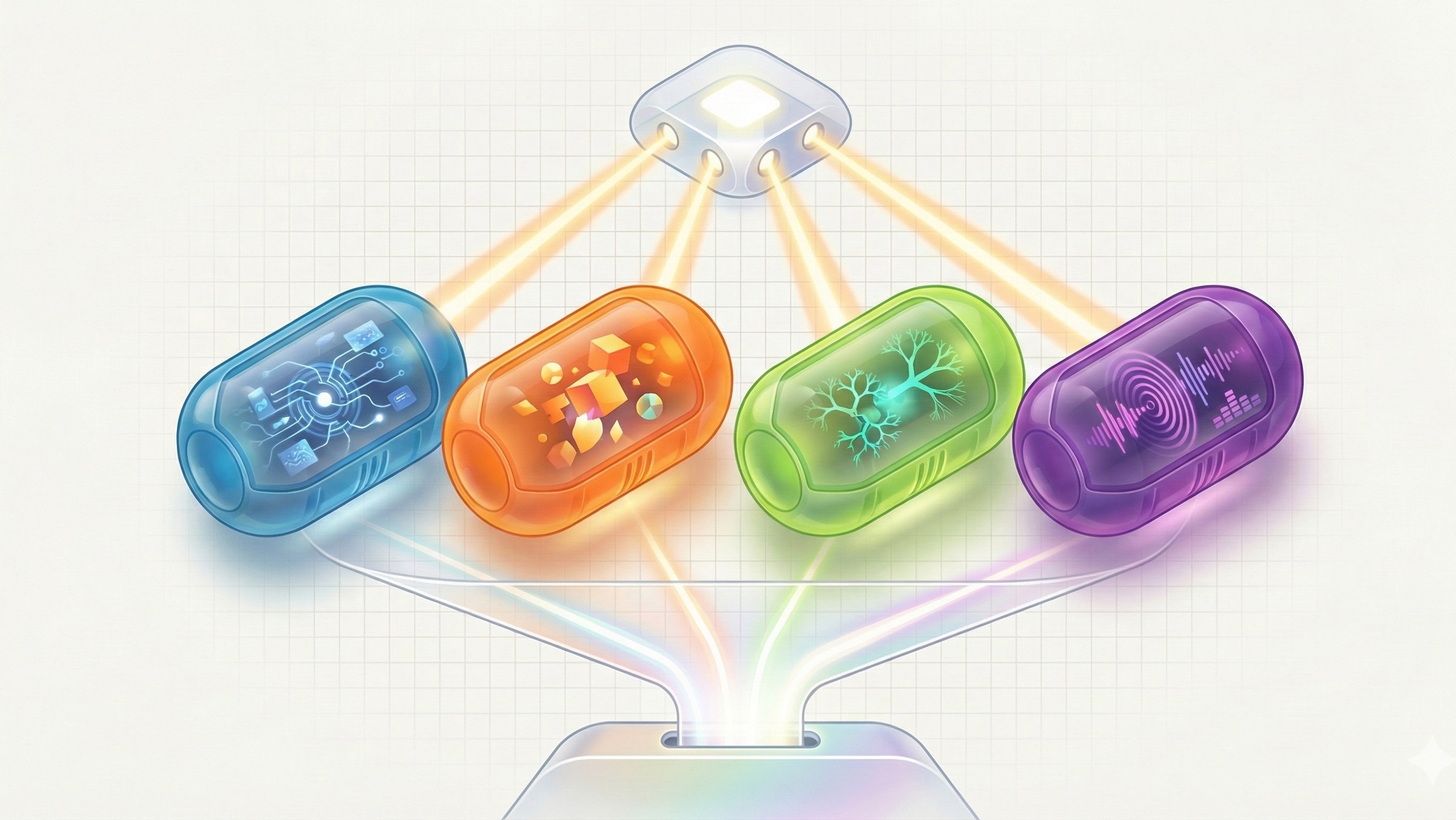
Parallelization is like sending multiple reporters to research different aspects of a story simultaneously. Instead of running AI tasks one after another, you run them all at the same time, then combine the results.
It differs from routing because instead of directing input to different paths based on classification, it launches multiple independent AI calls in parallel to gather diverse insights or data points.
How It Works
Conceptual Overview
Launch multiple independent AI calls simultaneously across different sources, perspectives, or data sets, then synthesize the results into a unified output.
Architecture Diagram
Use Cases
Parallelization shines when you need a comprehensive view from multiple angles. I’ve only used this pattern as a “testing ground” for potential biases in a story:
- Created different personas;
- Asked each persona to analyze the same news article;
- Synthesized the findings to get possible biases that I’m not seeing myself;